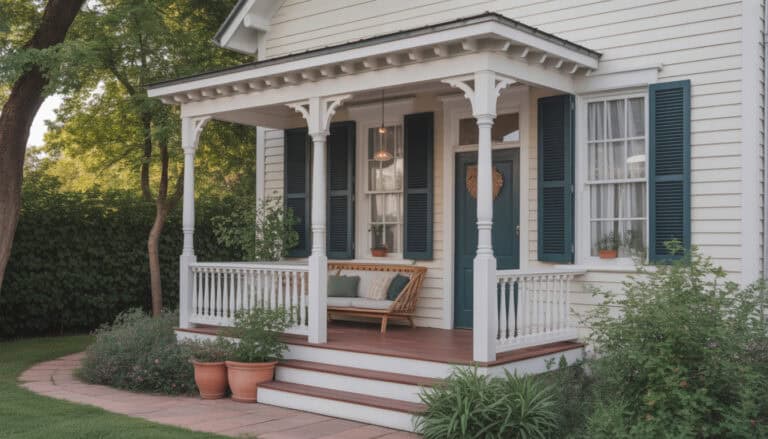
There’s something magical about wooden planters that instantly makes a porch feel like home. They bring warmth, character, and that natural charm that plastic just can’t match!
To keep your space feeling organic and fresh, these natural spring porch decor ideas are perfect to explore.
When I’m going for a natural and timeless porch look, I always decorate with a set of wooden planter boxes to bring in that organic texture!
Whether you’re growing herbs by the kitchen door or creating a flower-filled oasis, wooden planters turn ordinary outdoor spaces into welcoming retreats your whole family will love.
Why Wood Raised Beds Are a Game-Changer for Busy Moms
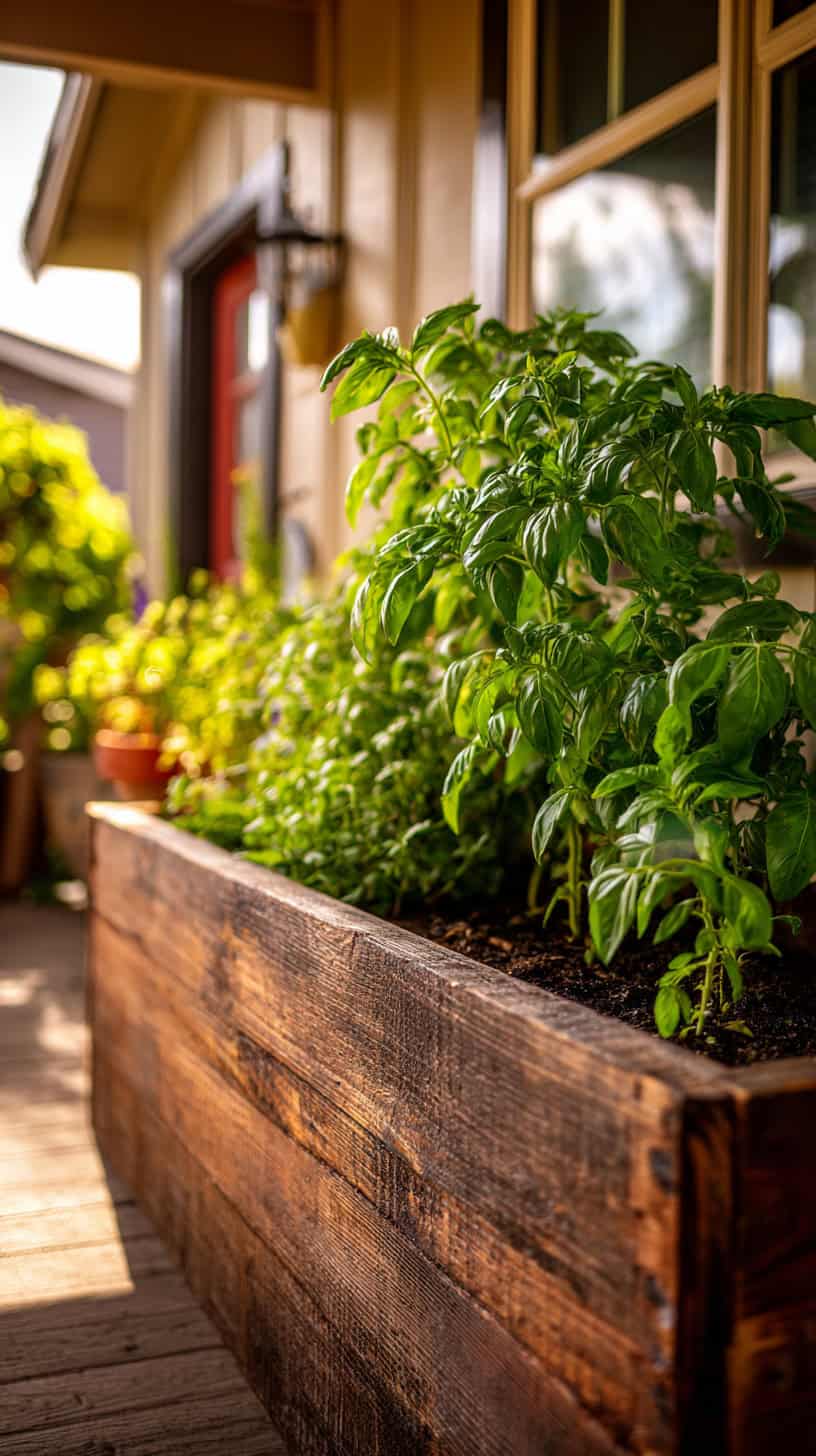

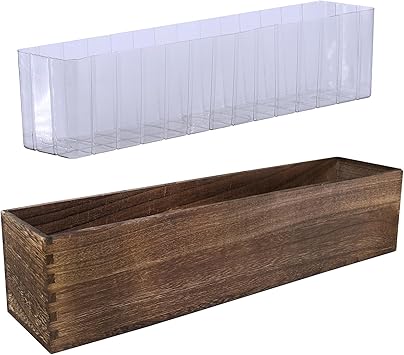
Let me tell you, as someone who’s juggled dinner prep while keeping an eye on little ones, wood raised beds have completely transformed how I garden. No more bending down until my back aches! These elevated garden boxes bring everything to a comfortable height, which means I can tend tomatoes and check on the basil without feeling like I’ve done a full workout.
The beauty of wood garden boxes goes way beyond convenience. They create natural boundaries that keep kids from accidentally trampling your prize petunias, and trust me, that’s priceless. My daughter knows exactly where the garden starts and the play area begins, which has saved countless plants from enthusiastic soccer balls.
Wood planters outdoor setups also warm up faster in spring than ground-level beds. This means you can start planting earlier and extend your growing season, which is amazing when you’re trying to keep fresh vegetables on the family table. Plus, you have complete control over the soil quality, so no wrestling with clay or rocks that seem to multiply overnight.
One of my favorite benefits? These outdoor planter ideas actually reduce weeds significantly. When you’re filling your boxes with fresh soil and compost, you’re not dealing with the weed seeds hiding in your yard. Less weeding means more time for the fun stuff, like watching your kids pick their first ripe strawberry.
Choose the Right Wood: Cedar, Douglas Fir, and Other Durable Options
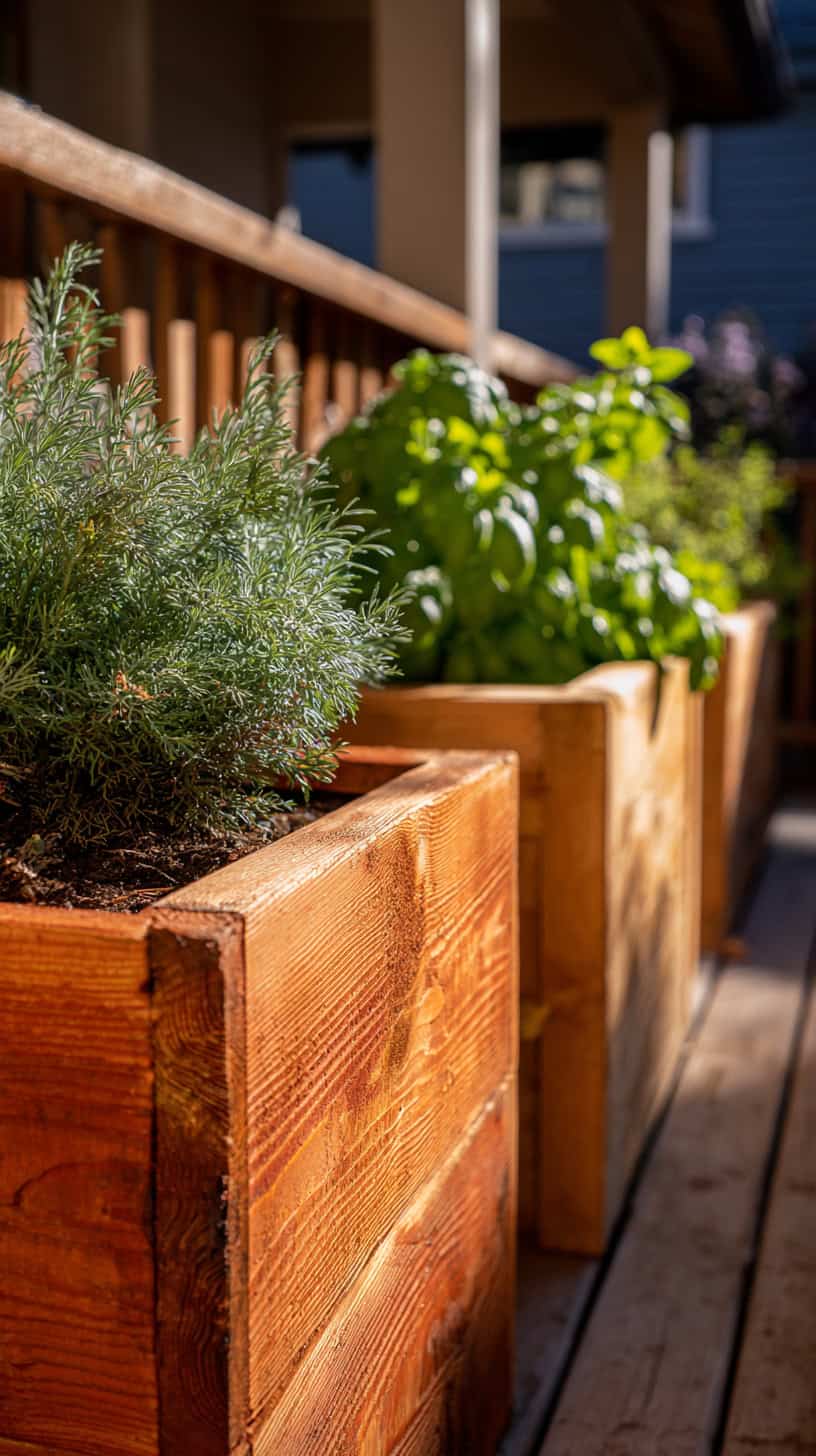
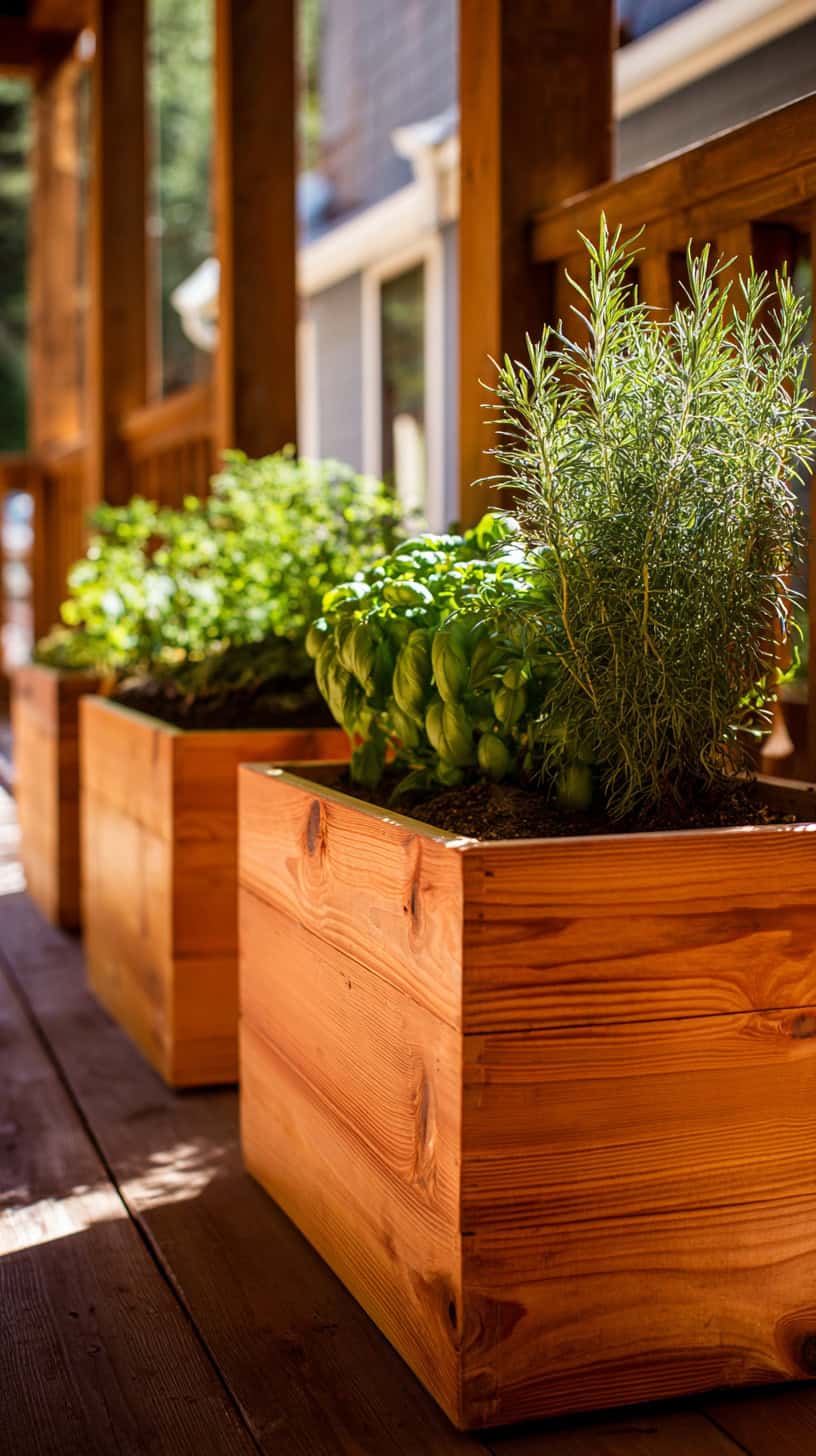
Not all wood is created equal when it comes to outdoor planters, and this is where a little knowledge saves you money and frustration down the road. Cedar is hands-down my top recommendation for wooden flower pots and larger containers. It naturally resists rot and insects without any chemical treatment, which matters when you’re growing food your family will eat.
Cedar wood planters can last 15 to 20 years outdoors, which is honestly hard to believe until you see older planters still going strong. The natural oils in cedar protect it from moisture damage, and it ages into this beautiful silvery-gray that looks intentionally rustic. Yes, it costs more upfront, but think of it as an investment in your porch’s future.
Douglas fir offers a more budget-friendly option that still delivers great durability. It’s strong, resists warping, and holds up well when properly sealed. I’ve used Douglas fir for several large wooden planters, and they’ve performed beautifully for years. Just make sure to apply a non-toxic wood sealer annually to maximize their lifespan.
Redwood is another premium choice with natural decay resistance similar to cedar. It’s gorgeous with rich, warm tones that make any wooden flower pot design stand out. If you can find sustainably sourced redwood at a good price, grab it.
Here’s what to avoid: pressure-treated lumber from before 2003 may contain arsenic compounds you definitely don’t want near edible plants. Modern pressure-treated wood uses safer preservatives, but I still prefer naturally rot-resistant woods for potted plants and food gardens. Pine and other softwoods work fine for short-term projects or decorative pieces, but they’ll need replacement every few years.
DIY Wooden Planters You Can Actually Build This Weekend
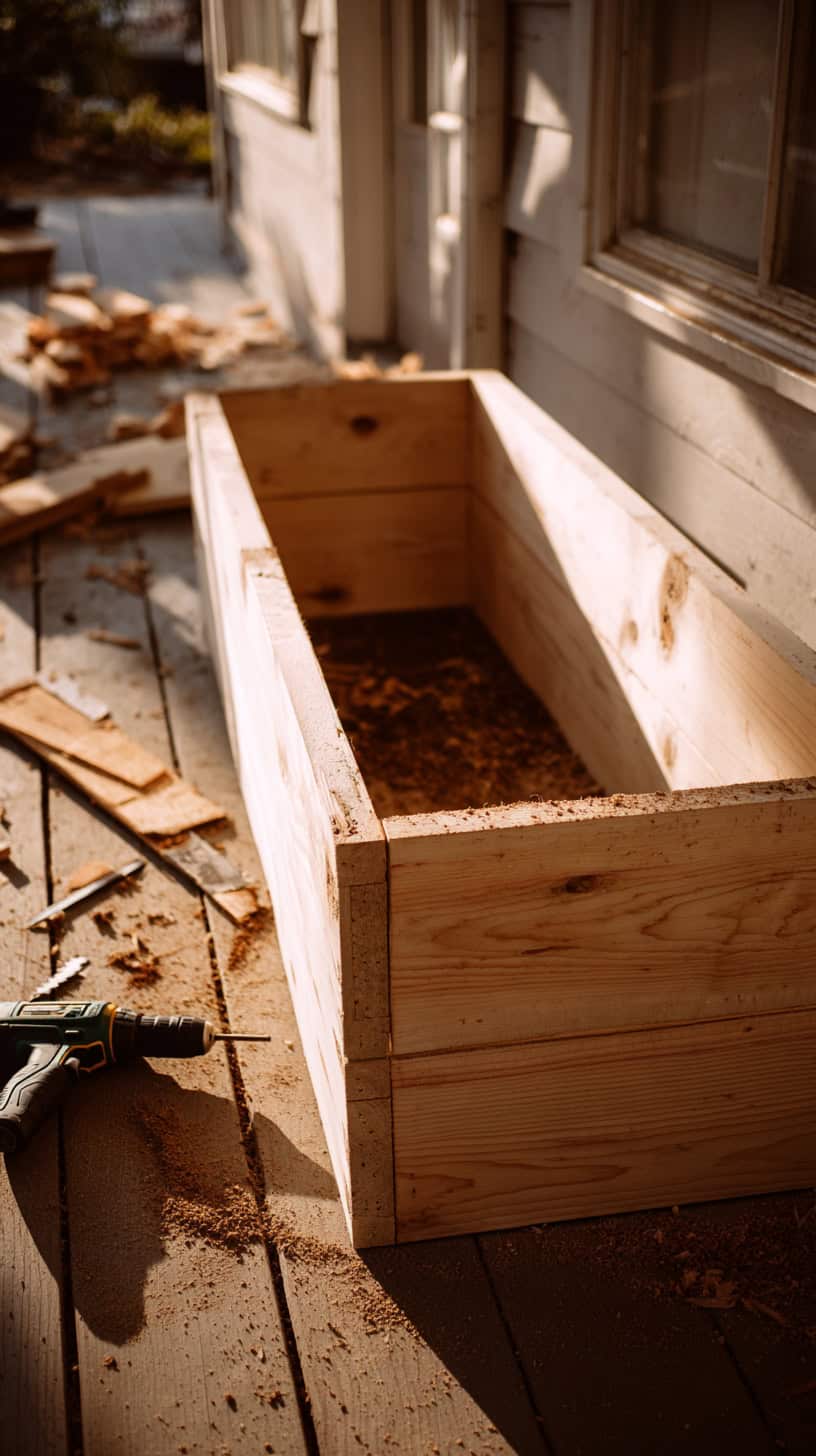

I love a good Saturday morning project, especially when it results in something beautiful for the porch. Building your own wood flower pots is way easier than you might think, and you don’t need a workshop full of fancy tools to make it happen.
The simplest design starts with just four boards creating a basic rectangular box. Seriously, if you can measure, cut, and screw boards together, you can build a planter. I made my first one with my oldest when he was seven, and it’s still holding herbs by our back door. We used cedar fence boards, which are inexpensive and perfectly sized for medium containers.
Pallet planters are another fantastic option that costs almost nothing. Those wooden shipping pallets that stores throw away? They transform into charming vertical gardens or rustic flower pot displays with minimal effort. Just make sure you’re using heat-treated pallets marked with “HT” rather than chemically treated ones. Stand a pallet upright, staple landscape fabric to the back, fill the slats with potting soil, and you’ve got instant planting pockets perfect for flowers or herbs.
For a weekend project with more visual impact, try building a tiered planter system. Stack two or three boxes of decreasing sizes to create levels, which looks amazing filled with cascading flowers and trailing plants. This outdoor flower pot design gives you tons of planting space without taking up much floor area, perfect for smaller porches.
Here’s my favorite beginner-friendly build: a simple window box style planter. You need just six pieces of wood, some screws, and about an hour. Cut two long sides, two short ends, and a bottom piece. Drill drainage holes in the bottom, assemble with exterior wood screws, and you’re done. Add decorative trim if you’re feeling fancy, or leave it simple and let the plants be the stars.
The best part about DIY wooden planters? You can customize the size exactly to your space. Need something narrow to fit on a railing? Make it 6 inches wide. Want a statement piece for the front entrance? Build it 3 feet tall. This flexibility means your outdoor planter ideas can perfectly match your home’s vibe and your family’s needs.
What’s Trending in 2026: Low-Maintenance Container Gardens
Container gardening is having a major moment right now, and I’m here for it. The trend has shifted toward setups that look stunning but don’t demand constant attention, which is exactly what busy families need. Large wooden planters filled with perennials that come back year after year are replacing high-maintenance annual displays.
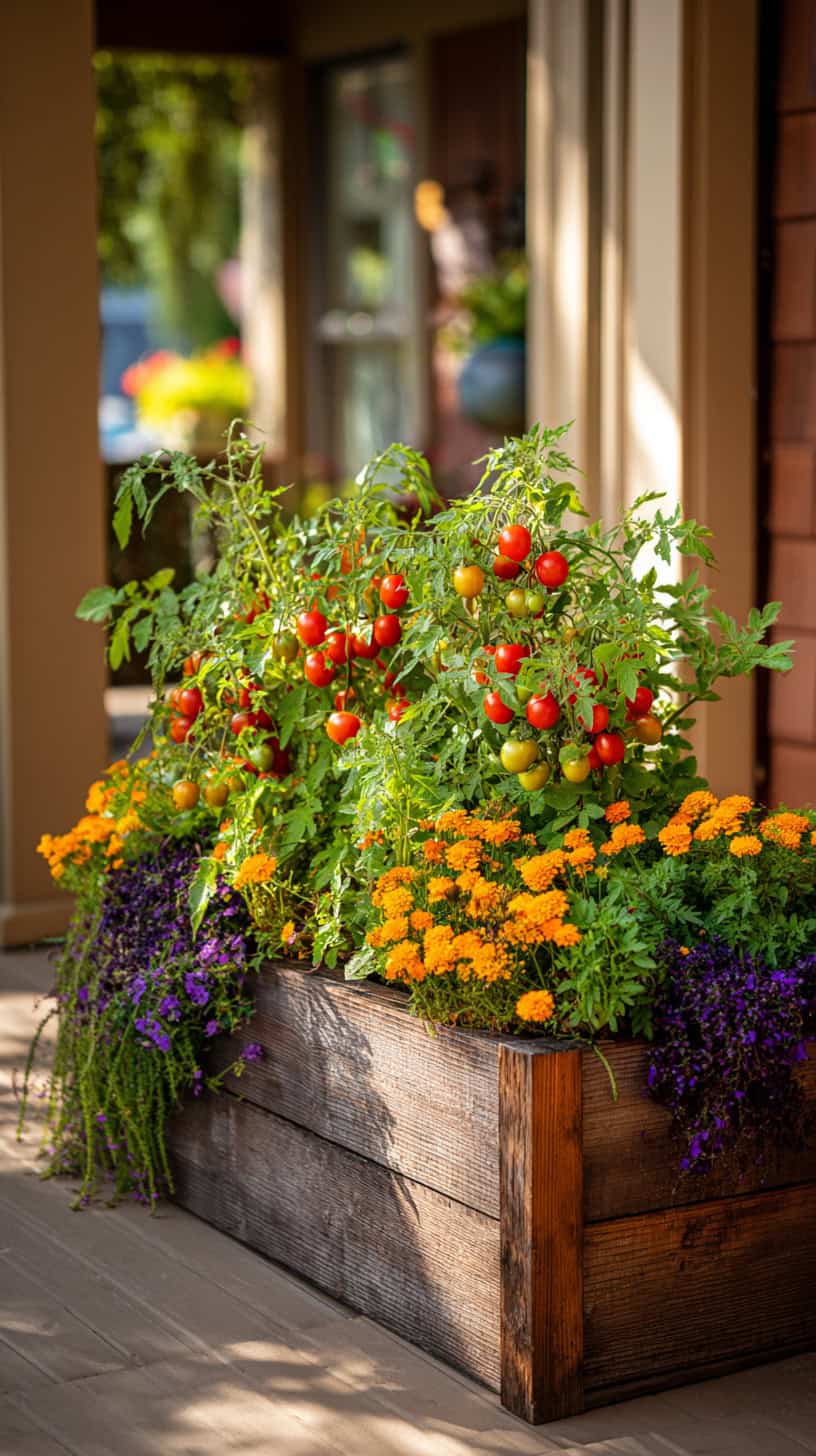
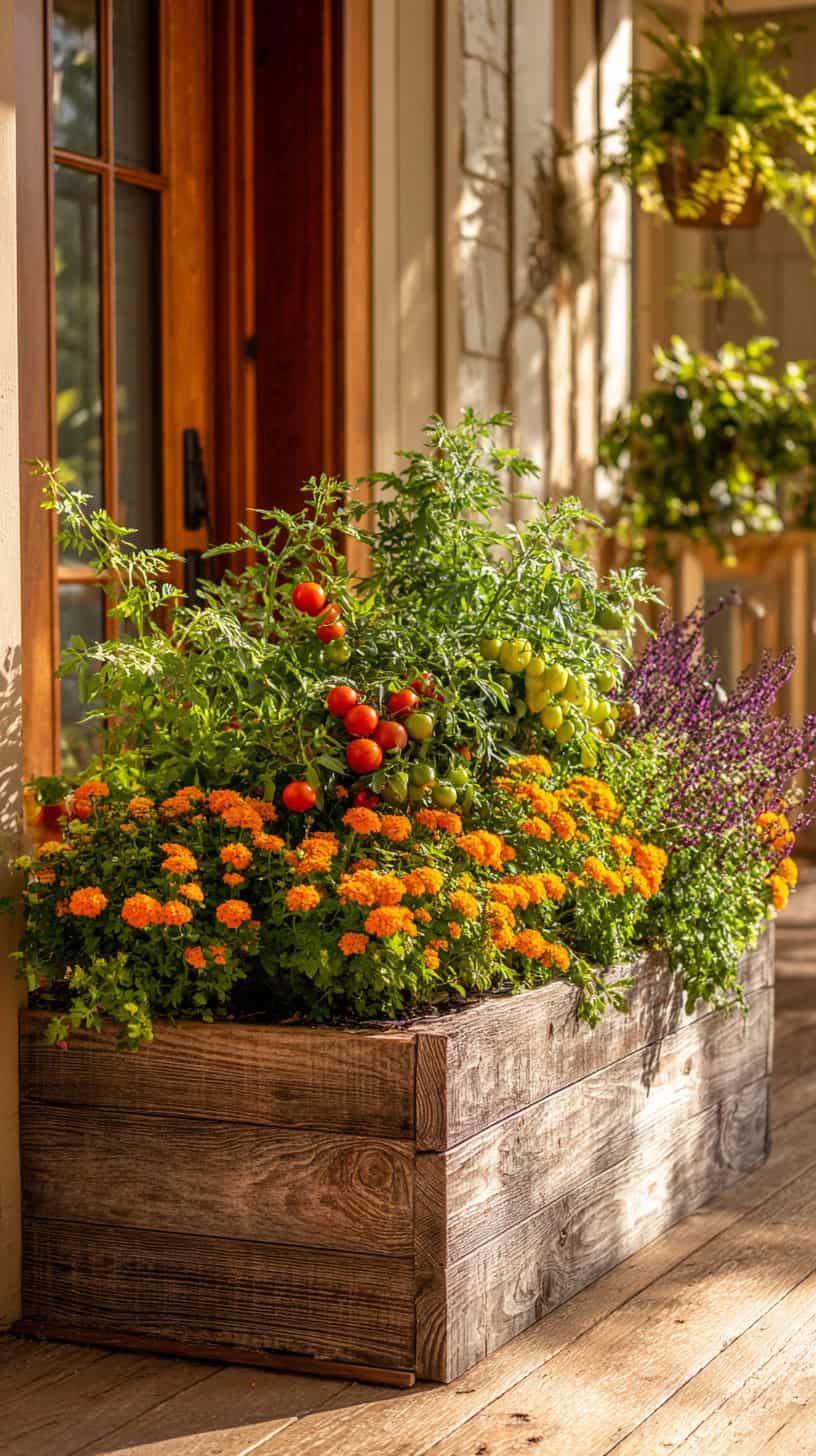
Mixed container gardens are huge this year, combining edibles with ornamentals in the same wood garden boxes. Imagine cherry tomatoes growing alongside marigolds and trailing sweet potato vine. It’s practical, beautiful, and teaches kids that gardens can be both pretty and productive. My youngest loves picking salad greens from our mixed planters because they’re surrounded by cheerful flowers.
Self-watering wooden planters are gaining popularity too, and honestly, they’re brilliant. These designs include a water reservoir at the bottom that keeps soil consistently moist without daily watering. Perfect for those weeks when life gets crazy and you forget to water until you see droopy leaves.
Drought-tolerant plantings in wood planters outdoor arrangements are trending as people become more water-conscious. Succulents, sedums, and ornamental grasses create gorgeous low-water displays that thrive on benign neglect. Pair these with the warm texture of wooden flower pots, and you’ve got an effortlessly chic look.
Vertical gardens using wooden structures continue to grow in popularity, especially for small spaces. Stack planters, wall-mounted boxes, and ladder-style displays maximize growing area while creating eye-catching focal points. This approach works beautifully for herbs, strawberries, and compact flowers.
The color palette trending right now favors natural wood tones or soft, muted paint colors. Think sage green, dusty blue, or warm gray rather than bright primary colors. These subtle shades let your potted plants take center stage while the containers provide elegant support.
Container and Planter Styles That Match Your Home’s Vibe
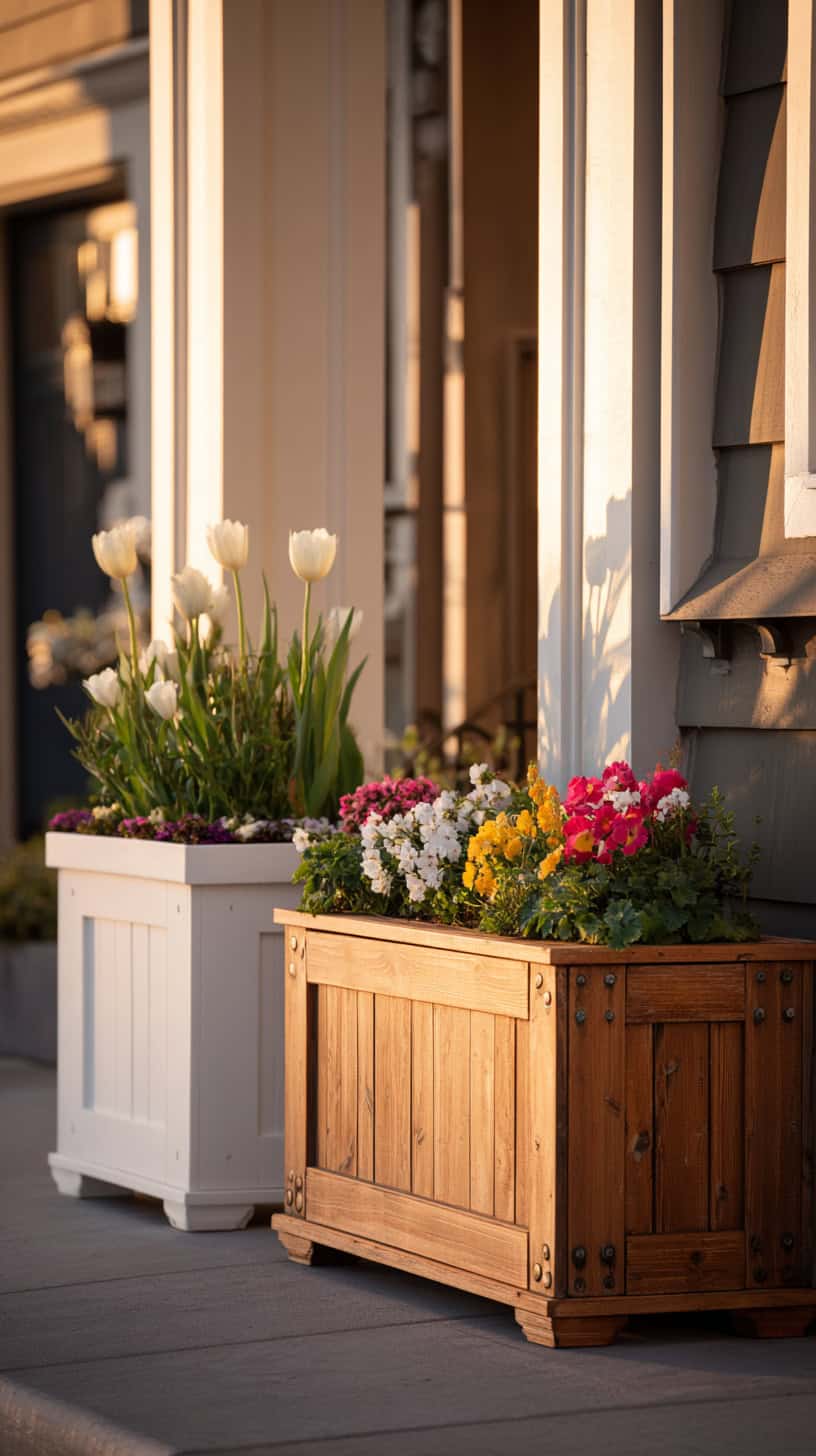
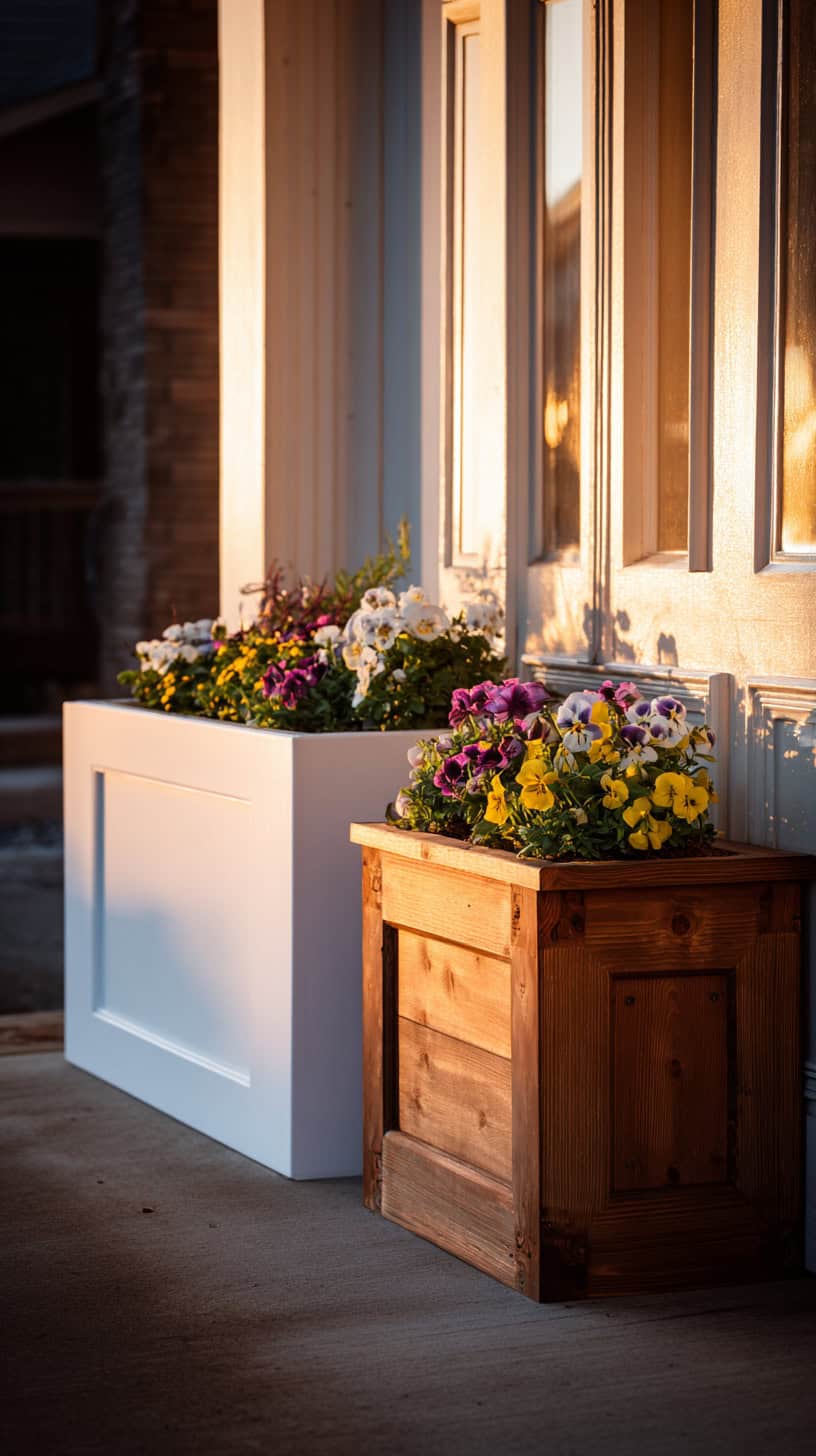
Your wooden planters should feel like a natural extension of your home’s personality, not something that clashes with your style. For modern farmhouse homes (which seems to be everyone’s vibe lately), simple rectangular wood garden boxes with clean lines look perfect. Leave the wood natural or paint it classic white for that fresh, airy feel.
If your home leans traditional, consider wooden flower pots with decorative details like routed edges, corner brackets, or feet that lift them slightly off the ground. These classic touches add elegance without going overboard. Pair them with terracotta pots in complementary sizes for a layered, collected look that feels timeless.
Cottage-style homes come alive with whimsical, slightly weathered wooden planters. I love mixing different sizes and heights, letting some planters develop that silvery patina while painting others in soft pastels. Window boxes overflowing with blooms are essential for this look, and they’re incredibly charming when made from reclaimed wood.
Contemporary homes need outdoor planter ideas with strong geometric shapes and minimal ornamentation. Think cube-shaped planters, long horizontal boxes, or dramatically tall columns. Stain the wood in deep espresso tones or go ultra-modern with black-painted finishes. The plants provide the softness and color against these structured containers.
Rustic or cabin-style homes can embrace rougher textures and natural imperfections. Pallet planters fit perfectly here, as do containers made from weathered barn wood or logs. These pieces tell a story and look like they’ve been part of the landscape forever, which is exactly the right feeling.
Mediterranean-inspired homes pair beautifully with wooden planters styled alongside terracotta pots. Use warm-toned woods and fill them with herbs like rosemary, lavender, and oregano. The combination of wood and classic terracotta creates that sun-soaked, relaxed atmosphere.
Don’t be afraid to mix materials either. Large wooden planters look stunning with smaller ceramic or metal accents scattered around them. This layered approach adds depth and interest while letting you incorporate different textures and heights.
Garden-Friendly Plants That Thrive in Wooden Planters
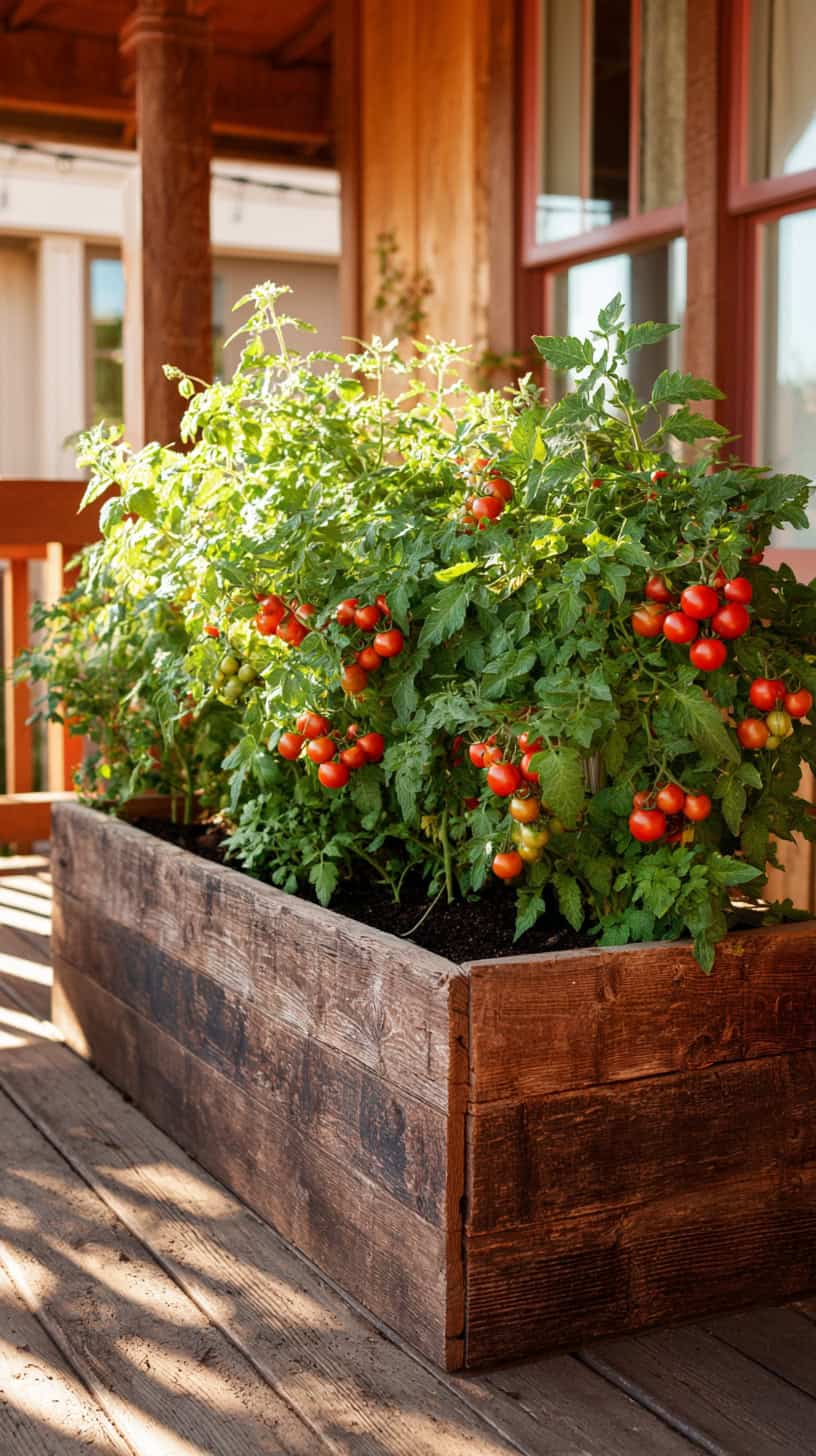
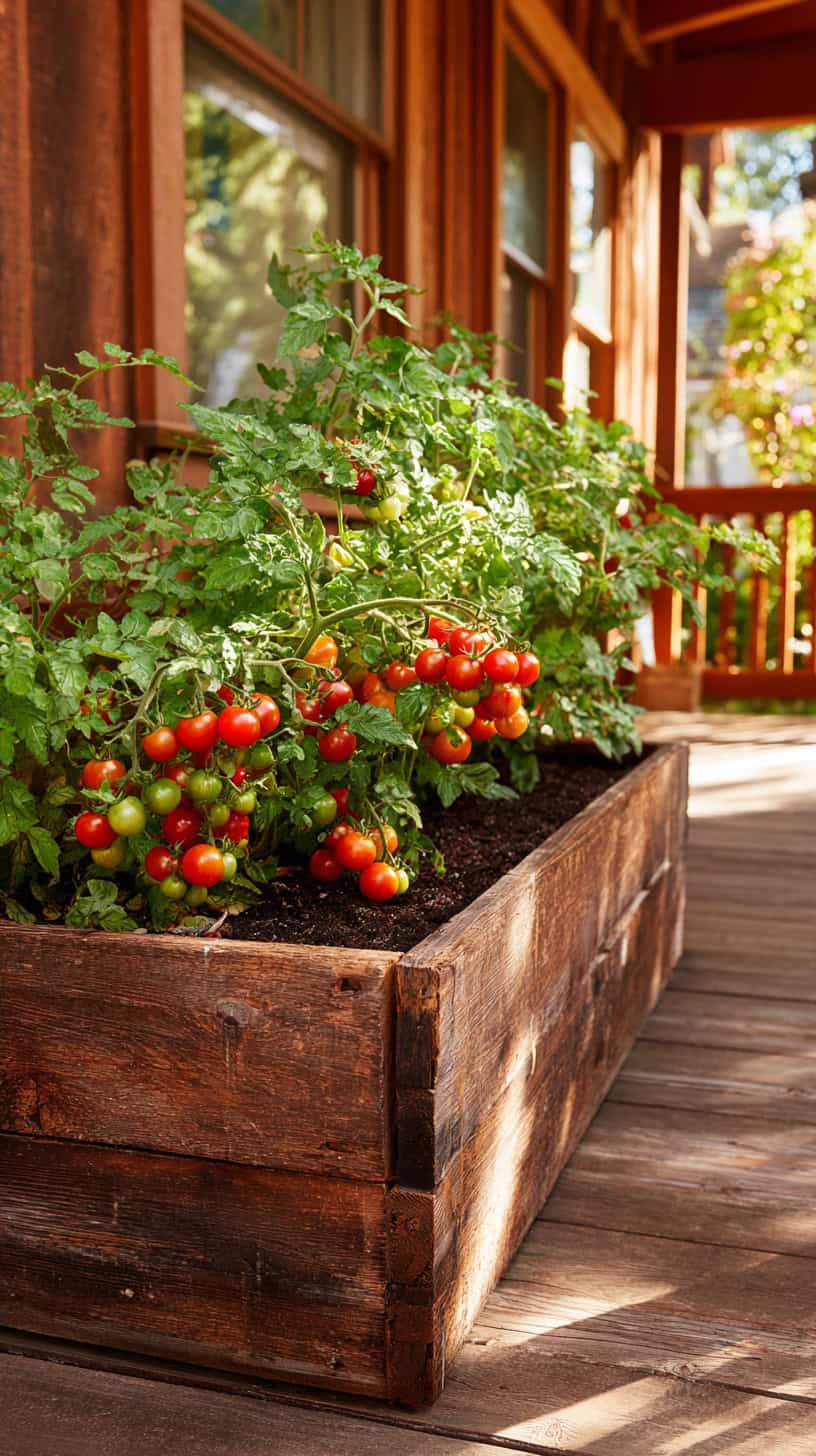
Choosing the right plants for your wood flower pots makes all the difference between containers that flourish and ones that struggle. The good news? Most plants actually love growing in wooden planters because wood insulates roots better than plastic, keeping them cooler in summer and warmer in spring and fall.
For sunny porches, tomatoes are absolutely perfect in large wooden planters. Cherry tomato varieties work especially well, and there’s nothing like sending kids outside to pick their own snacks. Peppers, both sweet and hot varieties, also thrive in containers and look beautiful with their glossy leaves and colorful fruits.
Herbs are my go-to recommendation for wooden flower pots near the kitchen. Basil, rosemary, thyme, oregano, and parsley all grow happily in containers. I keep a long window box style planter right outside our kitchen door filled with cooking herbs, and it’s used almost daily. The kids love being herb-pickers for dinner prep.
Lettuce and salad greens are container superstars that even beginning gardeners can’t mess up. Plant a mix of varieties in a shallow wood garden box, and you’ll have fresh salads for weeks. When one batch finishes, replant for continuous harvests.
For flowers, petunias are practically foolproof and bloom continuously all summer in potted plants. Geraniums offer bold color with minimal fuss, while calibrachoa (million bells) creates gorgeous trailing displays perfect for elevated planters. Marigolds attract beneficial insects and add cheerful pops of orange and yellow.
Shade-loving plants work wonderfully in wooden planters on covered porches. Hostas, ferns, impatiens, and begonias all thrive without direct sun. Coleus offers incredible foliage color in shade, with varieties ranging from chartreuse to deep burgundy.
Perennials in large wooden planters give you years of enjoyment. Daylilies, coneflowers, black-eyed Susans, and ornamental grasses all adapt well to container life. Just make sure your planters are big enough for root development and choose varieties suited to your climate zone.
Strawberries are amazing in wooden planters, especially tiered designs where berries can cascade over the edges. Kids go absolutely wild for picking their own strawberries, and honestly, so do I. They’re productive, pretty, and perfectly suited to container growing.
Make It Wheelchair-Accessible and Kid-Friendly

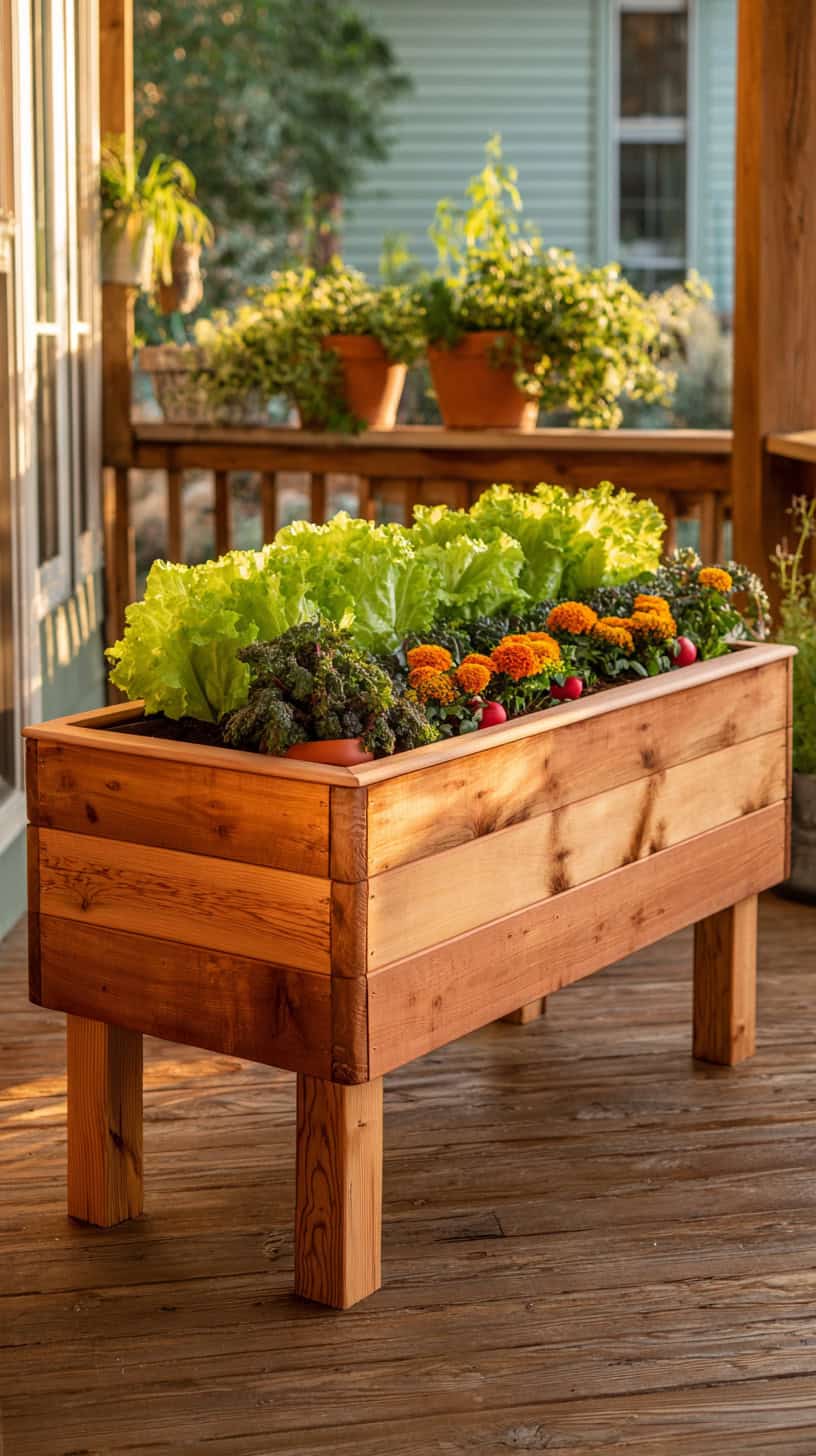
Creating gardens that everyone in the family can enjoy, regardless of mobility or age, is something I’m passionate about. Raised wood garden boxes at the right height make gardening accessible for wheelchair users and people with limited mobility. The standard recommendation is 24 to 30 inches high with a depth that allows reach without straining.
For wheelchair accessibility, make sure there’s clearance underneath the planter for knees and the wheelchair footrest. Elevate your boxes on sturdy legs rather than building them solid to the ground. This simple design change opens up gardening to so many more people.
Pathway width matters too. Make sure there’s at least 36 inches of clear space around accessible planters so wheelchairs and walkers can maneuver easily. Smooth, level surfaces around your outdoor planter ideas prevent tripping hazards and make navigation safer for everyone.
For kids, lower wooden planters work better for independent gardening. A height of 18 to 24 inches lets little ones see inside, reach plants easily, and feel ownership of their garden space. I built a shorter section of planters specifically for my kids, and they take so much pride in caring for “their” plants.
Kid-friendly planting goes beyond height. Choose large-seeded plants like beans, peas, and sunflowers that small fingers can handle easily. Fast-growing varieties keep children interested because they see results quickly. Sunflowers are absolutely magical for kids because they grow so tall and produce seeds they can harvest.
Safety considerations include using smooth, splinter-free wood and securing planters so they can’t tip over if climbed on. Round over sharp edges and countersink screws below the wood surface. These small details prevent injuries and make wooden flower pots safer for curious explorers.
Sensory plants add another dimension to accessible gardens. Lamb’s ear offers soft, fuzzy texture that kids love touching. Fragrant herbs like mint, lemon balm, and lavender engage the sense of smell. Colorful flowers attract butterflies and bees, creating movement and life that captivates all ages.
Create opportunities for independence by adding tool hooks at appropriate heights and making watering cans accessible. When kids can grab what they need themselves, they’re more likely to engage with the garden regularly. This builds responsibility and confidence along with gardening skills.
Budget-Smart Tips for Getting Started With Wooden Planters
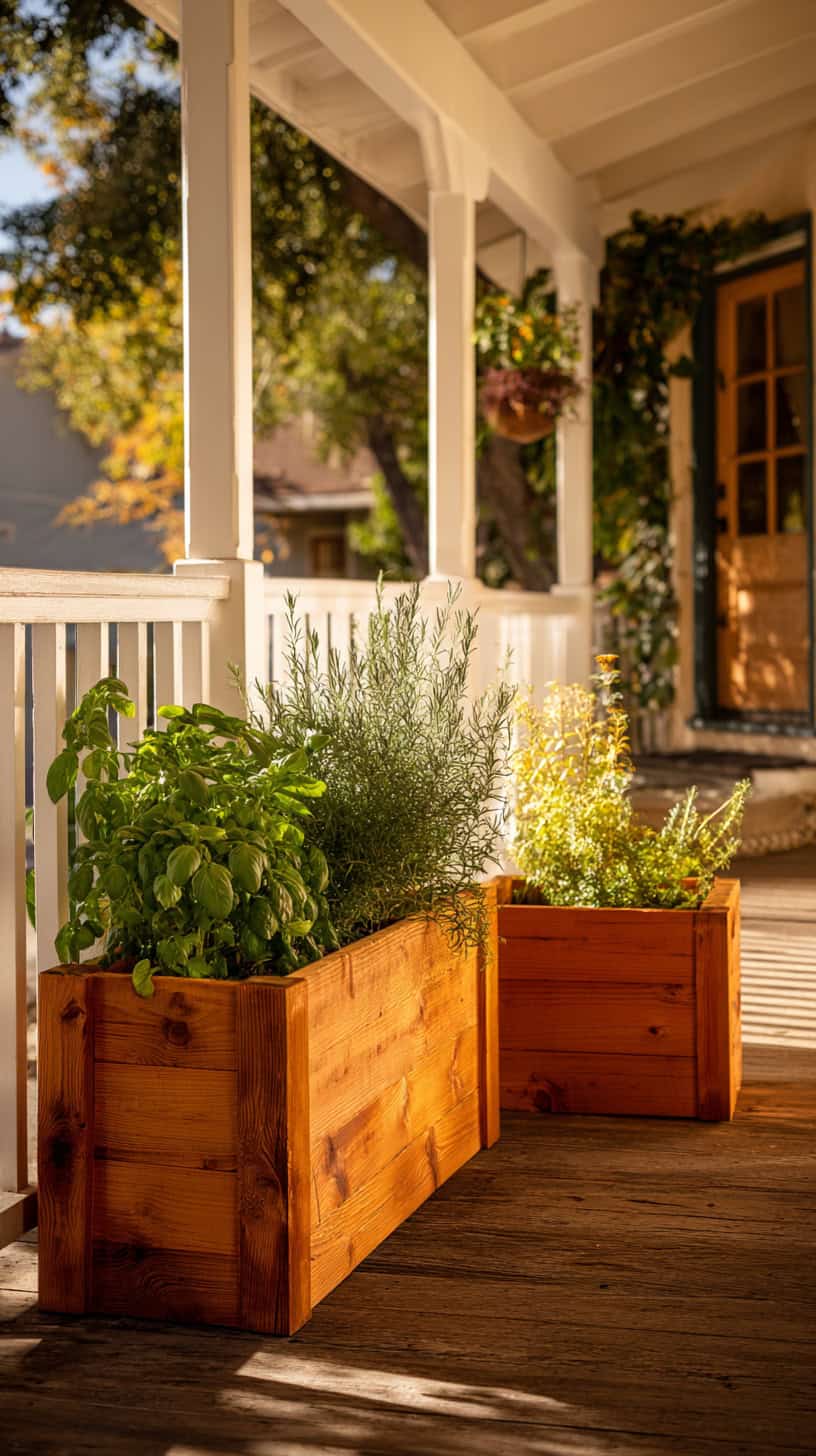

You don’t need to spend a fortune to create a beautiful collection of wood planters outdoor. I’ve built stunning porch gardens on tight budgets, and I’m excited to share what actually works without breaking the bank.
Start with one or two quality large wooden planters rather than buying many cheap ones. It’s better to have a few substantial pieces that last years than multiple flimsy containers that fall apart after one season. Focus your budget on cedar or Douglas fir for longevity, even if it means starting smaller.
Pallet planters are your best friend for budget gardening. Free or nearly free pallets transform into charming containers with just a few hours of work. Sand them down, add a coat of non-toxic sealant, and you’ve got rustic wooden flower pots that cost maybe ten dollars total. Check behind grocery stores, garden centers, and hardware stores for pallets they’re throwing away.
Buy wood during off-season sales. Lumber prices fluctuate throughout the year, and you’ll find better deals in late fall and winter when fewer people are building outdoor projects. Stock up then, and you’ll be ready for spring planting at a fraction of the cost.
Mix wooden planters with terracotta pots and other budget-friendly containers. This creates visual interest while spreading your investment across different price points. A couple of beautiful wood garden boxes paired with several inexpensive terracotta pots creates a collected, layered look that appears much more expensive than it actually is.
Make your own potting mix rather than buying bags of expensive specialty soils. Combine bulk peat moss or coir, perlite, and compost for a fraction of the cost of pre-mixed potting soil. For large wooden planters, this saves serious money because you need substantial volume to fill them.
Propagate plants from cuttings or divide perennials you already have rather than buying everything new. Many potted plants root easily from cuttings, and friends with established gardens often have divisions to share. Our neighborhood has an informal plant swap that’s saved everyone money while building community.
Choose perennials over annuals when possible. While annuals provide instant color, perennials return year after year, giving you much better long-term value. The initial cost is similar, but perennials keep delivering without repurchasing every spring.
Seal and maintain your wooden planters properly to extend their life. A coat of non-toxic wood sealer annually adds years to your investment. This small maintenance step prevents expensive replacements and keeps your outdoor flower pot design looking fresh.
Watch for end-of-season sales at garden centers. Late summer and fall bring deep discounts on plants, pots, and supplies as stores clear inventory. Perennials planted in fall establish well over winter and explode with growth the following spring.
Consider building your wooden planters as family projects. Not only does DIY save money, but the time spent together creates memories that matter more than perfectly constructed containers. My kids still point out “their” planters that we built together years ago, and those imperfect boxes are some of my favorites because of the stories they hold.
Starting with wooden planters doesn’t require perfection or a big budget. It just needs a willingness to get your hands dirty, try new things, and watch as your porch transforms into a welcoming, green space that brings your family joy every single day. The beauty of natural wood combined with thriving plants creates an atmosphere that simply can’t be matched, and trust me, once you start, you’ll find yourself dreaming up new outdoor planter ideas constantly. Your porch is about to become everyone’s favorite gathering spot.
This post may contain affiliate links. Read the full disclosure here.